Free shipping on orders over $475 in the US!

Menu
Apogee Instruments, Inc.
  • Home
  • Products
    • Compatibility Chart
    • Quantum (PAR & ePAR) Sensors / Meters
    • Pyranometers
    • PAR, Daily Light Integral, and Photoperiod Meters
    • Oxygen Sensors
    • Chlorophyll Concentration
    • Infrared Radiometers
    • Spectroradiometers
    • Temperature Sensors
    • NDVI Sensors
    • PAR Meters for Aquariums
    • UV Sensors
    • Guardian CEA Multi-Sensor Monitor
    • Photometric Sensor
    • Net Radiometer
    • Cloudburst Weighing Precipitation Gauge
    • microCache Bluetooth Micro Logger
    • Barometric Pressure
    • Solar Energy PV Monitoring
    • Accessories
    • Pyrgeometers
    • Red - Far-red and PAR-FAR Sensors
    • Aspirated Radiation Shield
    • Humidity Probes
    • Refurbished Products
    • Radiation Frost Detector
    • Replacement Cables
    • Calibration Services
  • ABOUT US
    • Contact Us
    • Case Studies
    • ISO 9001:2015 Certification
    • International Distributors
    • Careers
      • Accounting Assistant
    • Apogee News
    • Newsletters
    • Company History
    • Event Calendar
    • Leadership Team
    • Apogee Cares
    • Our Founder - Dr. Bruce Bugbee
    • Wholesale Application
    • Affiliate Program
    • Customer Satisfaction Survey
  • Integrators
  • Support
  • Sign In / Register
  • Search
  • International Distributors
  • My Cart (0)
    Your cart is empty

Chlorophyll Meter Support

Arugula, Collard greens, Kale, Romaine lettuce, and Swiss chard settings now available for the Apogee MC-100 Chlorophyll Meter. Click the "New Coefficients" button below to learn how to add these species to your MC-100.

Note: A recent software bug was discovered affecting MC-100 serial nubers 1525 - 1558. To fix this bug, you will need to follow the directions on this page: MC-100 Firmware Update Instructions.
This bug caused continuous beeping, freezes on calibration, and failures to find calibration files.

Specifications
Videos
Case Studies
Product Manuals
Spec Sheets
Technical Drawings
New Coefficients
Helpful Articles & Links
FAQs
Software & Datalogger Programs
Recalibration & Repair


Chlorophyll Meter Specifications
Specifications Icon
  MC-100
Default Display Unit µmol of chlorophyll per m2 of leaf surface
Optional Display Units CCI, SPAD
Measurement Area 63.9 mm2 (9 mm standard diameter), 19.6 mm2 (5 mm diameter with reducer)
Resolution ± 10 µmol m-2 chlorophyll concentration using generic equation
Linearity ± 1 %
Repeatability ± 1 %
Sample Acquisition Time Less than 3 s
Storage Capacity 8 MB for up to 160,000 data measurements
Internal GPS Storage 8 MB for up to 94,000 data measurements
User Interface 50 mm by 15 mm graphic display screen, 8 push buttons for control and data manipulation
Data Output Mini-B USB port provided for main data transfer
Measured Variables Ratio of optical transmission at 931 nm to optical transmission of 653 nm
Operating Temperature 0 to 50 C
Temperature Drift Temperature compensated source and detector circuitry over full range
Power Requirement Standard 9 V DC alkaline battery
Dimensions 152 mm length, 82 mm width, 25 mm height
Mass 210 g


Chlorophyll Meter Videos
Videos Icon

Adding New Species to the MC-100

If you can't access the video via Youtube, click here.

How and Why to Measure Chlorophyll

Chlorophyll Meter User Guide

If you can't access the video via Youtube, click here.

Chlorophyll Meter Quick Overview

If you can't access the video via Youtube, click here.

Chlorophyll Meter in Depth

If you can't access the video via Youtube, click here.

Lecture 7-Leaf Chlorophyll Concentration


Chlorophyll Meter Case Studies
Case Studies Icon
About Chlorophyll Meters

Chlorophyll is a green pigment found in plant cells, algae cells, and cyanobacteria. The primary function of chlorophyll molecules is radiation absorption, which provides energy essential for photosynthesis.

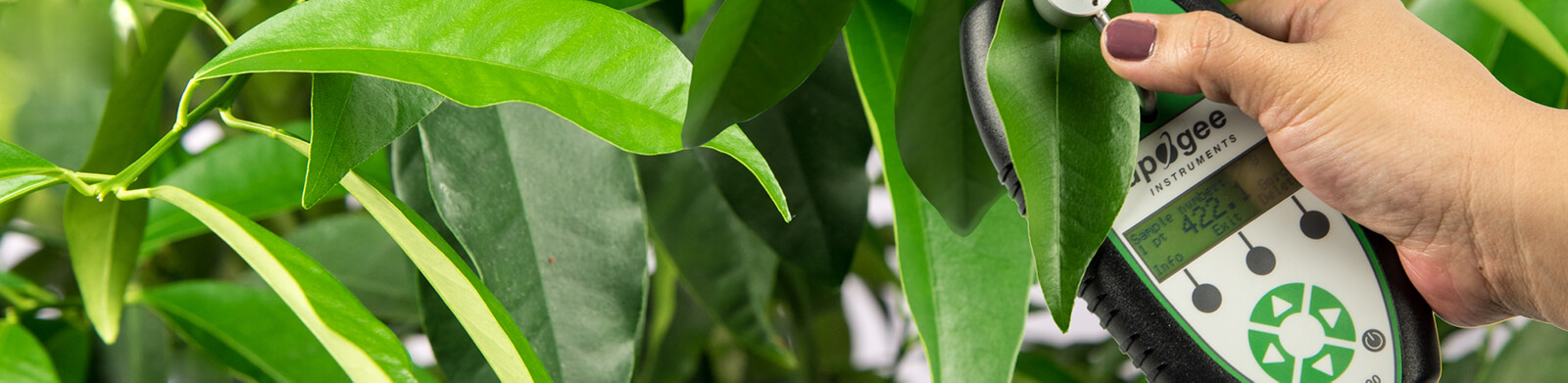
Hand-held chlorophyll meters typically provide a relative indication of chlorophyll in plant leaves. The patented Apogee model MC-100 chlorophyll concentration meter measures relative chlorophyll content and outputs an estimate of actual chlorophyll concentration in units of µmol per m2 of leaf surface (µmol m-2); mass per area of leaf surface, milligrams per square meter (mg m-2), has also been used.

The MC-100 provides an alternative to destructive sampling techniques for determining chlorophyll concentration. Non-destructive measurements are less time consuming and labor intensive and allows for leaves to be measured and monitored over an entire growth cycle. The meter is designed to make rapid replicate measurements of the same leaf or multiple leaves and stores the data for later use.

Typical Applications

Applications include:

• Chlorophyll concentration determination for plant nutrient status assessment, environmental stress impact, and fertilizer requirement
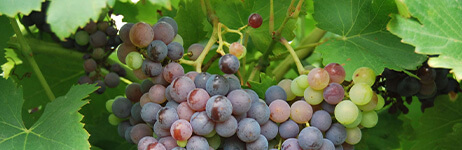
Cluster of grapes on the vine
Ozone Treatments on Grape Vines
An Apogee chlorophyll concentration meter helped measure the effects of ozone gas on the development of grape vines.
Read More >
PDF >
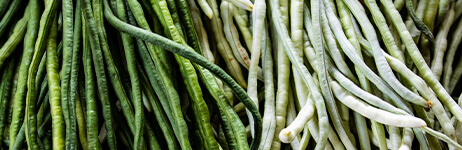
Multicolored green beans
Supplementary LED Light for Out-of-Season Green Beans
In this experiment, an Apogee chlorophyll concentration meter and LED lights were used to see if growing green beans out-of-season would be financially feasible and produce high-quality.
Read More >
PDF >
Cut flowers
Salinity Sensitivity of Anemone and Ranunculus Flowers
Apogee’s pyranometer, full-spectrum quantum meter, and chlorophyll concentration meter were used to study the salinity sensitivity of anemone and ranunculus flowers.
Read More >
PDF >
An Apogee spectroradiometer (PS-300) is used in a study
Far-red Photons on Photosynthesis in Lettuce Canopies
Apogee Instruments’ SS-110, MC-100, and PS-300 are used to study how adding far-red photons affects carbon dioxide and photon absorption in plant canopies.
Read More >
PDF >
Tomatoes grown with aquaponics
Basil Performance Evaluation in Aquaponics
An Apogee chlorophyll concentration meter is used to study aquaponic growth of basil in tropical locations.
Read More >
PDF >
Estimating Chlorophyll with NDVI
Researchers used Apogee Instruments' NDVI sensors, SP-230, and an MC-100 to determine if NDVI sensors can be used to estimate the relative chlorophyll content of buffaloberry plants.
Read More >
PDF >
Fertiliziing Pot Grown Crops
Fertilizing Pot Grown Crops
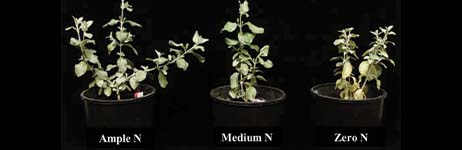
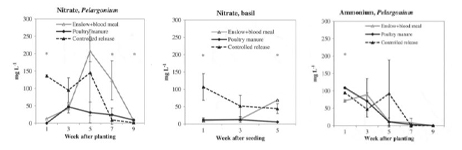
Researching the dynamics of nitrogen availability in pot grown crops with organic fertilization
Read More >

If you would like to share your application of this product, please click here


Chlorophyll Meter Product Manuals
Product Manual Icon

Chlorophyll Meter Manual (MC-100) >


Chlorophyll Meter Specification Sheets
Specification Sheets Icon

Chlorophyll Meter Spec Sheet (MC-100) >


Chlorophyll Meter Technical Drawings
Technical Drawings Icon

Chlorophyll Meter Tech Drawing (MC-100) >


Chlorophyll Meter Crop-specific Settings
New Coefficients Icon

When Apogee released the MC-100, it came with 22 different crop specific coefficients plus a generic setting for all other crops. Since then, we have added some species and will continue to do so upon popular request. These new coefficients are linked here and can be added following the instructions below. Please note that MC-100 meters with a serial number less than 1402 were only programmed to be able to hold up to 27 crop specific coefficients at a time. This can be a limiting factor as we build the library of available coefficients. If you have a unit with this limitation, you can easily upgrade the software by following the instructions linked HERE >.

New Crop-specific Settings Introduced in 2022 Zip File

Arugula, Collard greens, Kale, Romaine lettuce, and Swiss chard Settings

New Crop-specific Settings Introduced After April 2019 Zip Files

Cannabis and Grapevine Settings

Coffee, Spinach, and Strawberry Settings

Cherry, Hops, and Blackberry Settings

Original Crop-specific Settings Introduced Prior to April 2019 Zip File

Original Settings

Instructions

1. Extract the files contained in the zip file located in the link above.

2. Plug the micro USB cable into your MC-100's USB port.

3. Plug the other end of the USB cable into your computer.

4. Turn the MC-100 on, and press the "Data" button. The MC-100 should now show up as a connected device on your computer.

5. On your computer, access the MC-100. You should now see a list of files with a .tab extension.

6. Copy the new .tab files extracted from the zip file into your MC-100 with the other .tab files.

7. On the MC-100, press the "Eject" button.

Verify that the files transferred successfully:

1. In the MC-100 home menu, press the "Run" button.

2. Press the "Setup" button.

3. Press the "up" arrow button once to access the "Use custom measurement" menu.

4. Press the "Edit" button.

5. Change the highlighted option from "no" to "yes" using the "up" or "down" arrow buttons.

6. Press the "right" arrow button once.

7. Use the "up" arrow and "down" arrow buttons to scroll through the coefficients files and confirm that the new files are listed.

8. To use a custom unit file, simply press the "Accept" button.

For more detailed instructions including images, click one of the links below:

Installing New Species-Specific Coefficients - PowerPoint

Adding New Species to the MC-100 - Video


  Helpful Articles and Links

   GPS Software Update Installation Instructions - v19a

   Software Fix for Serial Numbers 1525 - 1558

   How the Meter Works

   Unit Conversions

   MC-100 GPS Information

   Sample Chamber Gasket Replacement Instructions

MC-100 Journal Articles

   In situ Measurement of Leaf Chlorophyll Concentration: Analysis of the Optical/Absolute Relationship

   Sensitivity of Seven Diverse Species to Blue and Green Light: Interactions with Photon Flux

   Field and Airborne Spectroscopy and its Application to Remote Sensing of a Wetland Environment

CCM-200 and CCM-200 Plus Journal Articles

   Effects of Cultivar, Fruit Number and Reflected Photosynthetically Active Radiation on Fragaria x ananassa Productivity and Fruit Ellagic Acid and Ascorbic Acid Concentrations

   Red:far-red Light Ratio and UV-B radiation: their effects on Leaf Phenolics and Growth of Silver Birch Seedlings

   Photosynthetic Stimulation under Long-term CO2 Enrichment and Fertilization is Sustained across a Closed Populus Canopy Profile


 FAQs

What do I do when the Apogee logo displays, but the screen then goes completely dark or light?
After the screen goes completely dark or light, try holding down the up or down arrows to adjust the contrast.

What do I do when the meter powers on and beeps, but nothing is showing on the screen?
Perform an extended power cycle by removing the battery from the unit and letting it sit out over night. Try reinserting the battery and powering the unit on the next day.


 

Didn't find your answer?

  1. Home
  2. / Chlorophyll Concentration
  3. / Chlorophyll Meter Support
MC-100 Chlorophyll Concentration Meter
Quick View

MC-100 Chlorophyll Concentration Meter

$2,058.97

Compare Products

Subscribe to Our newsletter

About Apogee Instruments, Inc.

Address:
721 West 1800 North
Logan, UT 84321
United States of America

Hours: Monday-Friday 8 AM- 5 PM MST

Main Line / Order Status: (435) 792-4700
or sales@apogeeinstruments.com

Technical Sales and Support: (435) 245-8012
or techsupport@apogeeinstruments.com

Support

  • Technical Sales & Support
  • Recalibration & Repairs
  • FAQs & Alerts
  • Software & Apps
  • Datalogger Programs
  • Submit a Software Bug Report
  • Unit Conversions
  • RoHS, REACH, and PROP65 Statement
  • Sign In / Register
  • Wishlists
  • Sitemap

Product Information

  • Product Catalog
  • Case Studies
  • Product Manuals
  • Specification Sheets
  • Technical Drawings

Purchase

  • Ordering Information
  • Shipping
  • Quote Request
  • Returns & Warranty
  • Policies
  • International Distributors
  • Distributor Center
  • Wholesale Application
  • Affiliate Registration
  • Integrators
  • Customer Satisfaction Survey
© Apogee Instruments, Inc.

Search in Apogee Instruments, Inc.

Cart Checkout
  • products
    • Compatibility Chart
    • Quantum (PAR & ePAR) Sensors / Meters
    • Pyranometers
    • PAR, Daily Light Integral, and Photoperiod Meters
    • Oxygen Sensors
    • Chlorophyll Concentration
    • Infrared Radiometers
    • Spectroradiometers
    • Temperature Sensors
    • NDVI Sensors
    • PAR Meters for Aquariums
    • UV Sensors
    • Guardian CEA Multi-Sensor Monitor
    • Photometric Sensor
    • Net Radiometer
    • Cloudburst Weighing Precipitation Gauge
    • microCache Bluetooth Micro Logger
    • Barometric Pressure
    • Solar Energy PV Monitoring
    • Accessories
    • Pyrgeometers
    • Red - Far-red and PAR-FAR Sensors
    • Aspirated Radiation Shield
    • Humidity Probes
    • Refurbished Products
    • Radiation Frost Detector
    • Replacement Cables
    • Calibration Services
  • About Us
    • Contact Us
    • Case Studies
    • ISO 9001:2015 Certification
    • International Distributors
    • Careers
      • Accounting Assistant
    • Apogee News
    • Newsletters
    • Company History
    • Event Calendar
    • Leadership Team
    • Apogee Cares
    • Our Founder - Dr. Bruce Bugbee
    • Wholesale Application
    • Affiliate Program
    • Customer Satisfaction Survey
  • Integrators
  • Support
  • Account
    • Sign In / Register
    • Wishlists
    • Returns
More Info